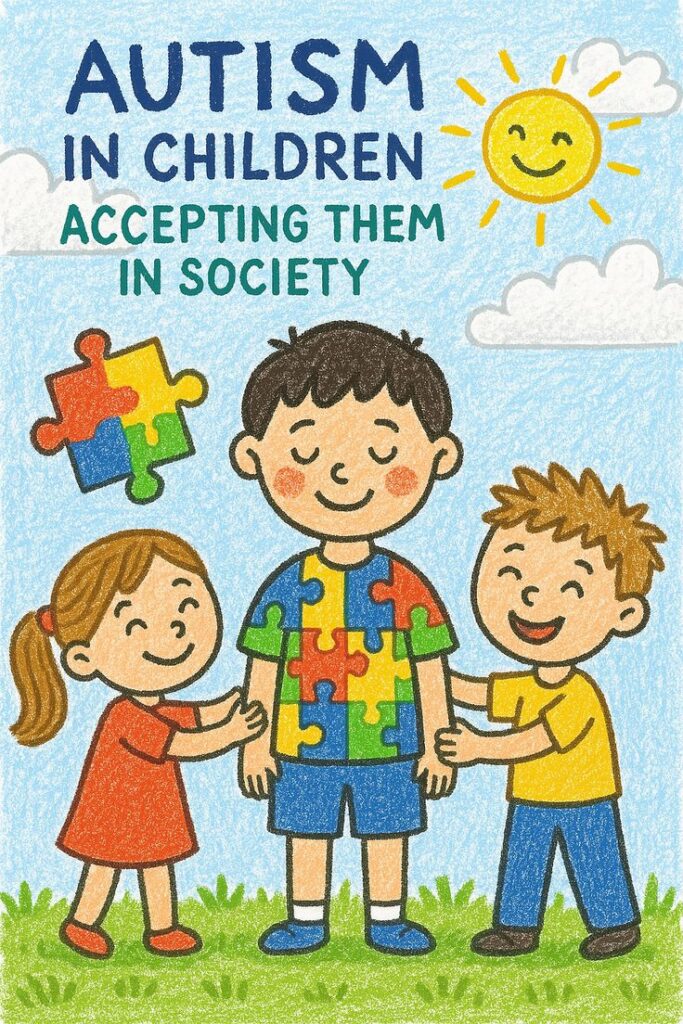

Autism Spectrum Disorder (ASD) – Understanding, Support, and Care
🔹 What is Autism Spectrum Disorder (ASD)?
Autism Spectrum Disorder is a neurodevelopmental condition that affects how individuals communicate, interact socially, and process information.
It is called a spectrum because characteristics and support needs vary from person to person.
Autism is not an illness; it is a difference in brain development.
🔹 Key Characteristics of Autism
Differences in social interaction, such as limited eye contact or difficulty understanding social cues.
Challenges in verbal and non-verbal communication, including delayed speech or limited expressive language.
Presence of repetitive behaviors, routines, or focused interests.
Sensitivity to sounds, lights, textures, or touch.
🔹 Early Signs of Autism
Limited response to name or social engagement.
Delayed speech or lack of meaningful communication.
Reduced interest in peer interaction or pretend play.
Repetitive movements such as hand-flapping or rocking.
Strong preference for routines and difficulty with change.
🔹 Importance of Early Identification
Early identification allows for timely intervention, which significantly improves developmental outcomes.
Early support helps enhance communication, learning ability, and social skills.
Families gain clarity and guidance for planning appropriate care.
🔹 Autism Assessment and Diagnosis
Autism assessment involves developmental history, behavioral observation, and standardized tools.
Evaluations focus on cognitive skills, language, social behavior, and sensory processing.
A structured assessment helps understand both strengths and challenges.
🔹 Support and Intervention for Autism
Intervention plans are individualized, based on age, abilities, and specific needs.
Therapy focuses on improving communication, social interaction, and daily living skills.
Structured and consistent support promotes meaningful progress over time.
🔹 Communication Support
Helps develop speech, language, and alternative communication skills.
Supports both verbal and non-verbal expression.
Enhances understanding and social engagement.
🔹 Social Skills Development
Supports learning social rules, interaction skills, and emotional understanding.
Helps improve peer relationships and confidence.
Encourages meaningful participation in social environments.
🔹 Behavioral and Emotional Regulation
Assists individuals in managing emotions, frustration, and behavioral responses.
Helps reduce anxiety and improve adaptive coping skills.
Encourages positive behavior and self-regulation.
🔹 Sensory Processing Support
Addresses over-sensitivity or under-sensitivity to sensory input.
Helps individuals feel more comfortable in daily environments.
Improves focus, behavior, and emotional balance.
🔹 Role of Family and Caregivers
Family involvement plays a crucial role in long-term development.
Guidance helps caregivers understand behaviors and support learning at home.
Consistent strategies across home, school, and therapy improve outcomes.
🔹 Educational and School Support
Collaboration with educators to provide classroom accommodations.
Helps improve learning experience and academic participation.
Supports inclusive and supportive education planning.
🔹 Strength-Based Approach
Focuses on identifying and nurturing individual strengths.
Encourages confidence, independence, and self-esteem.
Promotes acceptance and respect for neurodiversity.
🔹 Long-Term Outlook
With appropriate support, individuals with autism can lead fulfilling and meaningful lives.
Progress occurs at an individual pace and should be respected.
Continuous support helps improve quality of life and independence.